

Article Detail
24 Oct
Don’t feel overwhelmed—there are a lot of types of lights and a lot of spaces to place them. One of the best things that you can do to scope out your own project it to grab a good, high-powered flashlight with a dimming optic and get out into your yard at night. Then, play with the light. See what looks cool, or what might not work as well.
Here’s a look at the various landscape lighting effects you might want to try:
Up Lighting
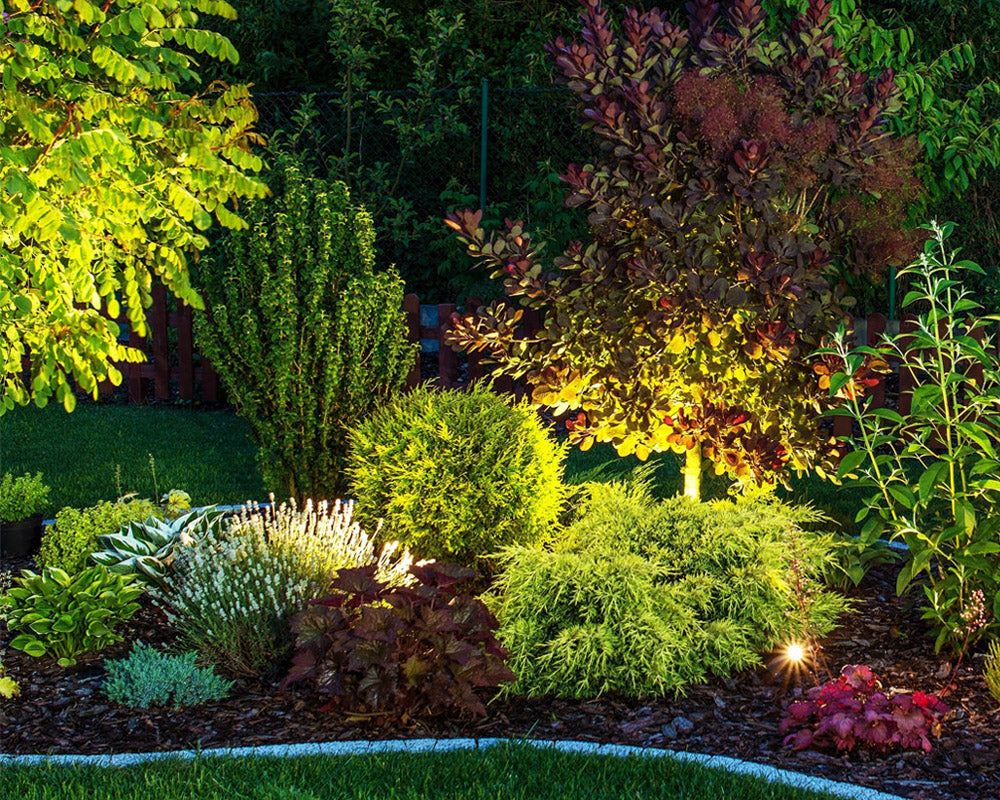
Up lighting is one of the most basic forms of landscape lighting. It is used to create drama with a taller structure or tree. You can choose to highlight the trunk of (generally larger) trees, or the underside of the tree’s canopy on larger or smaller trees.
Use with: Spotlights, Well Lights
Silhouetting
This is a fantastic effect for highlighting dramatic shapes you might have hiding in plain daylight. Place the light source behind the item, and light toward where the main vantage point will be, making sure that the light source itself cannot be seen.
Use with: Spotlights, Well Lights
Shadowing
This is the reverse technique of silhouetting. Placing the light between the main vantage point and the item being lit, with the light source aimed at the item. This really only works when you have a wall or flat surface behind the item being lit to catch the shadows created. But it can create a bit softer, more moody effect.
Use with: Spotlights, Well Lights, Flood lights
Moon Lighting
This is an especially effective way of using lighting when you have larger trees in your space. The light source is placed high up in the tree aimed down, washing the branches and ground below in light. It creates an impressive effect when used with an open-branched tree.
Use with: Spotlights
Grazing
This can be a great option if you have a hardscape-heavy yard. Grazing involves placing the light close to the flat surface and aiming directly up or down the surface to create dramatic light and shadow play. You can graze up or down, but the idea is to take advantage of a texture across a flat plane, so uneven or irregular patterns work best. This can add an upscale touch, as it is often seen in hotel and restaurant design.
Use with: Well Lights, Hardscape Lights
Washing
Sometimes a space will need more ambient lighting. To create a well-lit space, try flooding a large wall or hedge in an entertainment area with light, which will “wash” the space with light. Use a wide-beamed light placed between the main vantage point and the surface to cast an even, gentle light over the whole area. (Photo via Hinkley Lighting)
Use with: Flood Lights
Path Lighting
This one seems pretty basic, but it can easily go wrong. Think about how many lights you really need. People often use way too many, creating an over-lit space that feels cramped. If possible, try placing the fixtures on either side of the path, working back and forth to create an effective and inviting entry.
Use with: Path Lights, Bollards
Now you have the basics to go forth and lay out your own landscape design. It's important to note that it's still important that you consult with a professional when laying out your landscaping plan so they can ensure you're working with the right voltage for your transformer and other important details.
The key is to take your time. And you can start small and build from there—an over-lit space can be as uncomfortable or unusable as a completely dark one.
There are a million ways to light your landscape, but the fun is in creating a unique look that reflects your own personal taste and lifestyle.